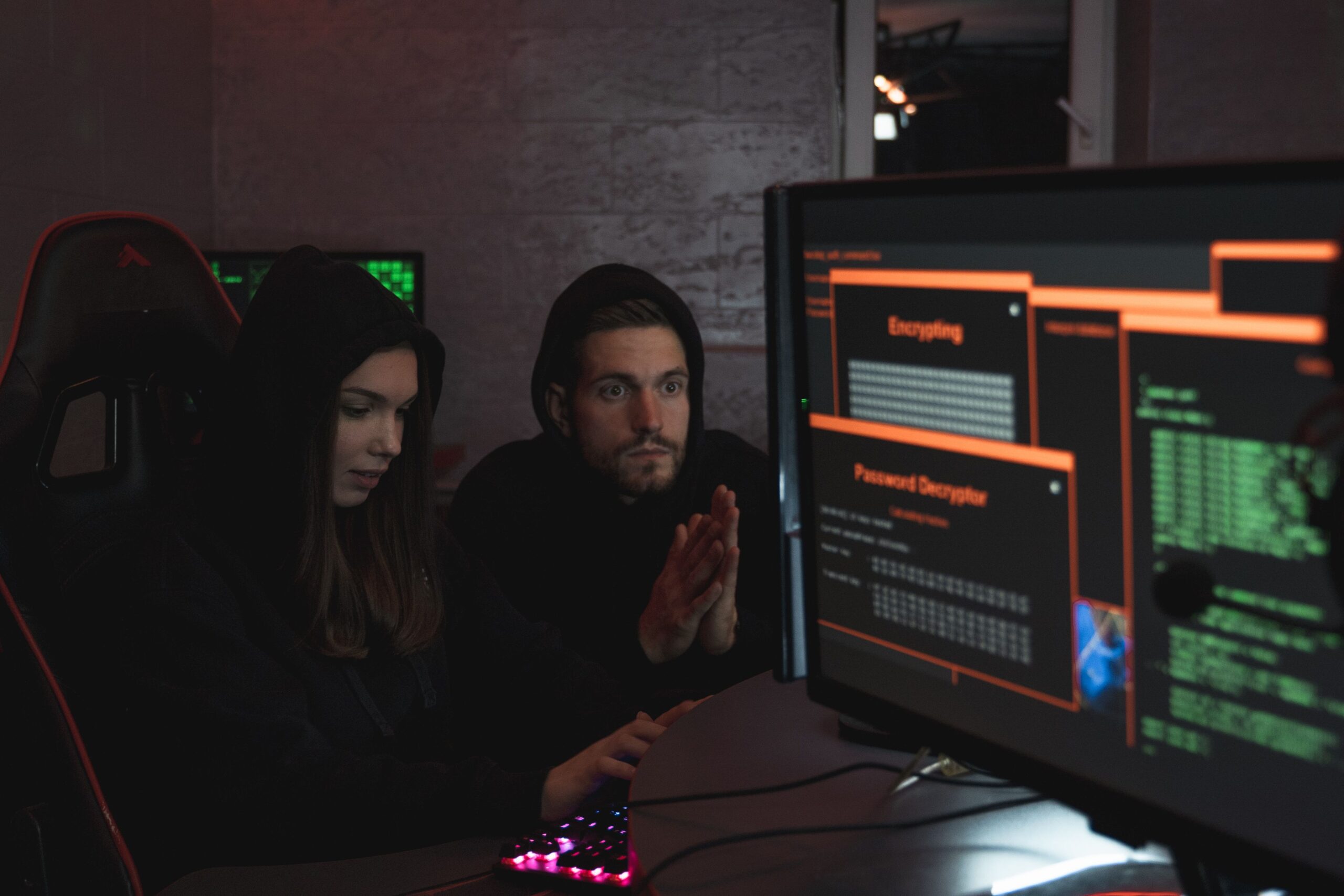

It’s a run-of-the-mill Wednesday when an employee at your organization receives an email from the CEO requesting that an urgent wire transfer of $200,000 be made to a new contractor.
The email mentions specific project details and mimics the CEO’s own writing style. Still, the large amount requested makes the employee feel like something’s off.
Moments later, their desk phone rings and the CEO is on the other line demanding to know why the transfer hasn’t been made.
Their voice has the same familiar quality they’d expect to hear. They’re using speech cadence and phrases that sound just like what they’re used to hearing at monthly company meetings where the CEO regularly speaks. To the employee, it sounds like the real deal.
Only it’s not the real CEO.
It’s an AI phishing attack, using cloned audio from a public press conference to pass off an incredibly convincing message.
Yet the employee is certain that they’re actually speaking with the company CEO, and initiates the $200,000 transfer.
At this point, the attacker has already won, and the company is stuck reacting to a major security breach.
This is the reality of AI cyberattacks in 2026. For many SMBs, these attacks are already becoming more common and more sophisticated than they can keep up with.
How AI-Powered Cyberthreats Are Changing the Game
Back in the early days of the internet and IT, all most companies needed was a simple anti-virus program to defend against the bulk of cyberattacks.
But as technology has progressed, so have the methods cybercriminals use to launch their attacks. Now, AI-powered cyberthreats are dramatically increasing the scale, complexity, and adaptability of attacks.
The targets most likely to be in their crosshairs? It’s not the billion-dollar corporate giants. It’s the small and midsize business (SMBs) that lack dedicated security and IT teams who are most vulnerable to these advanced cyberattacks.
That’s because AI is not only giving hackers super-powered weapons, it’s lowering the barrier to entry. Even less experienced attackers can launch sophisticated attacks, using AI tools to scrape LinkedIn and company sites for data to generate thousands of highly customized AI phishing attacks. Those attacks can now be automated with minimal human attention.
The sophistication of AI phishing attacks means that AI can convincingly mimic the tone, writing style, and even voice of specific individuals. Data shows that it only takes a few minutes of publicly available audio to create a believable deepfake voice that can be used to impersonate leadership.
We’re talking about entire communication chains and even voice-calls that are entirely artificial, yet sound like they’re sent from company leadership.
On top of all this, these attacks also have the unprecedented ability to learn and adapt their strategies. Phishing variations are essentially A/B tested in real time, and adjusted based on employee behavior.
When it comes to modern threats, basic antivirus and security filters simply can’t keep up.
The Most Common Types of AI Cyberattacks in 2026
AI cyberattacks in 2026 aren’t necessarily reinventing the wheel as much as they are amplifying existing attack methods and refining them with AI.
AI Phishing Attacks
Traditional phishing attacks were often clumsy and relatively easy to spot. Spelling mistakes, grammar errors, and sloppy, unprofessional email addresses were clear indicators that an email wasn’t to be trusted.
Now, AI phishing attacks are one of the biggest threats to SMBs. These email scams can be highly personalized, often mentioning coworkers, clients, and tools to make them seem familiar and trustworthy, all to get you to bite the hook.
Business Email Compromise (BEC) 2.0
BEC 2.0 is an advanced form of AI phishing attack that often targets high-value employees, particularly executives and finance teams.
In some cases, attackers gain access to real email accounts. In others, they rely on spoofed domains and use AI to mimic the communication style of their target. They can send emails that are nearly indistinguishable from legitimate ones, and even switch channels to SMS or phone calls to increase legitimacy.
Through these tactics, attacks can potentially gain the power to edit the banking details of financial transactions, and initiate wire transfers capable of stealing millions.
Deepfake Voice and Video Attacks
In 2026 cyberattacks are capable of making people question their own eyes and ears. That’s because it is now possible to mimic not only audio, but also video of key figures.
Deepfake messages or phone calls from company leaders requesting urgent action or money transfers can be nearly impossible for employees to spot.
AI-Enhanced Ransomware
AI helps ransomware attacks move laterally across networks, spreading more quickly and widely. These advanced attacks can also identify the highest-value data before encrypting, and target backups and recovery systems. That puts even more pressure on victims to pay up.
Automated Vulnerability Exploitation
Before AI, hackers had to manually search for vulnerabilities. Now, machine learning models can scan large codebases, APIs, and network configurations to quickly discover attack points. They can then synthesize working exploit code with only minimal human input.
The Common Cybersecurity Mistakes SMBs Are Making
With all these changes, the same old approach to cybersecurity isn’t going to work anymore.
One of the biggest cybersecurity mistakes SMBs are making in 2026 is relying on antivirus alone to protect their business. That may have flown in 2006, but AI-powered cyberattacks routinely bypass traditional antivirus tools.
Today, cybersecurity for SMBs begins with endpoint protection. It’s the natural evolution of traditional antivirus software. It secures the laptops, tablets, smartphones, and servers your organization uses with software designed to detect and stop advanced threats.
Another common cybersecurity gap is weak multi-factor authentication (MFA). MFA is one of your strongest protections, but when it’s only applied to email, or relied on only through SMS, a major cybersecurity gap is left for AI attacks to exploit.
Poor email security is another culprit. Today’s businesses require advanced email filters that protect against AI phishing and BEC 2.0. Neglecting this area with only basic spam filters increases your likelihood of falling victim to impersonation attacks.
Not keeping your people trained on the evolving nature of threats is another major cybersecurity mistake SMBs are making. Phishing attempts are harder to detect than ever before. Employees need to be trained on today’s threat landscape and prepared with a clear incident response plan, so that everyone knows what steps to take when something goes wrong.
The Core IT Security Checklist for SMBs
So how do SMBs address these common cybersecurity gaps? The best place to start is by addressing these three components: endpoint protection, advanced email filtering, and multifactor authentication.
Endpoint protection is where we find one of the biggest security gaps in SMBs. Each device on your network is capable of becoming an entry point for cyberattacks. Endpoint protection uses behavioral analysis and cloud-based monitoring to detect and block threats from using your devices as gateways for an attack.
You’ll also need to make advanced email filtering a key part of your cybersecurity approach. These tools don’t just block spam, they use their own AI tools to create behavioral and contextual risk models capable of detecting unusual patterns in email that are common in AI phishing, impersonation, and BEC attacks.
A lack of comprehensive multifactor authentication is one of the most common oversights we see. Too often SMBs fall victim to attacks because they enabled MFA only on their email accounts and not other core systems. MFA should cover everything, including cloud apps, VPNs, and admin accounts. SMS options are vulnerable to SIM card swapping. Your MFA should ideally be app or hardware-based.
These three areas are where we are consistently seeing SMBs exposed to modern AI threats.
Additional Ways SMBs Can Stay Ahead of AI-Driven Cyberattacks
Beyond the core three areas, there are additional measures you can take right now to strengthen cybersecurity for SMBs.
Prioritize access control. The principle of least privilege is your friend. Every user, system, or application should have access to only the essential permissions and data necessary for them to perform their specific functions. If an account is compromised, the damage will be limited.
Always run system and software updates as soon as they become available. Keeping automatic updates on helps plug critical security vulnerabilities. It might take extra time here and there, but always ensure you have the latest updates running.
Keep encrypted backups. You should always have recent offline, immutable backups available to recover from. But those backups are useless if they can’t be restored. Run regular recovery testing to make sure that you can recover quickly from an incident.
Keep your team updated. Employees must be aware of the growing sophistication of cyberattacks, particularly AI phishing and BEC attacks. This is still one of the most likely areas for organizations to suffer a breach. Teammates should know how and who to escalate a situation to, and be familiar with your company’s incident response plan.
Stay Ahead of AI-driven Cyberattacks With ITque
For most SMBs, it is time-consuming and expensive to keep up with modern cybersecurity. Most simply don’t have the tools or experience to manage these threats in-house.
That’s a big reason why small to midsized businesses are prime targets for modern cyberattacks.
At ITque, we solve this exact issue by offering fully managed IT and security solutions. Instead of keeping a costly in-house IT team, you can outsource your company’s cybersecurity needs to a team of dedicated professionals who will monitor your organization’s cybersecurity 24/7.
Our managed solutions provide everything your organization needs to stay safe, including endpoint protection, advanced email filtering, MFA, and more. All for a predictable monthly fee.
We take on the burden of managing cybersecurity in an AI world, so you can focus on your core business.
Contact ITque today to learn more about how our managed IT and cybersecurity services can keep you protected in the age of AI-driven cyberattacks.