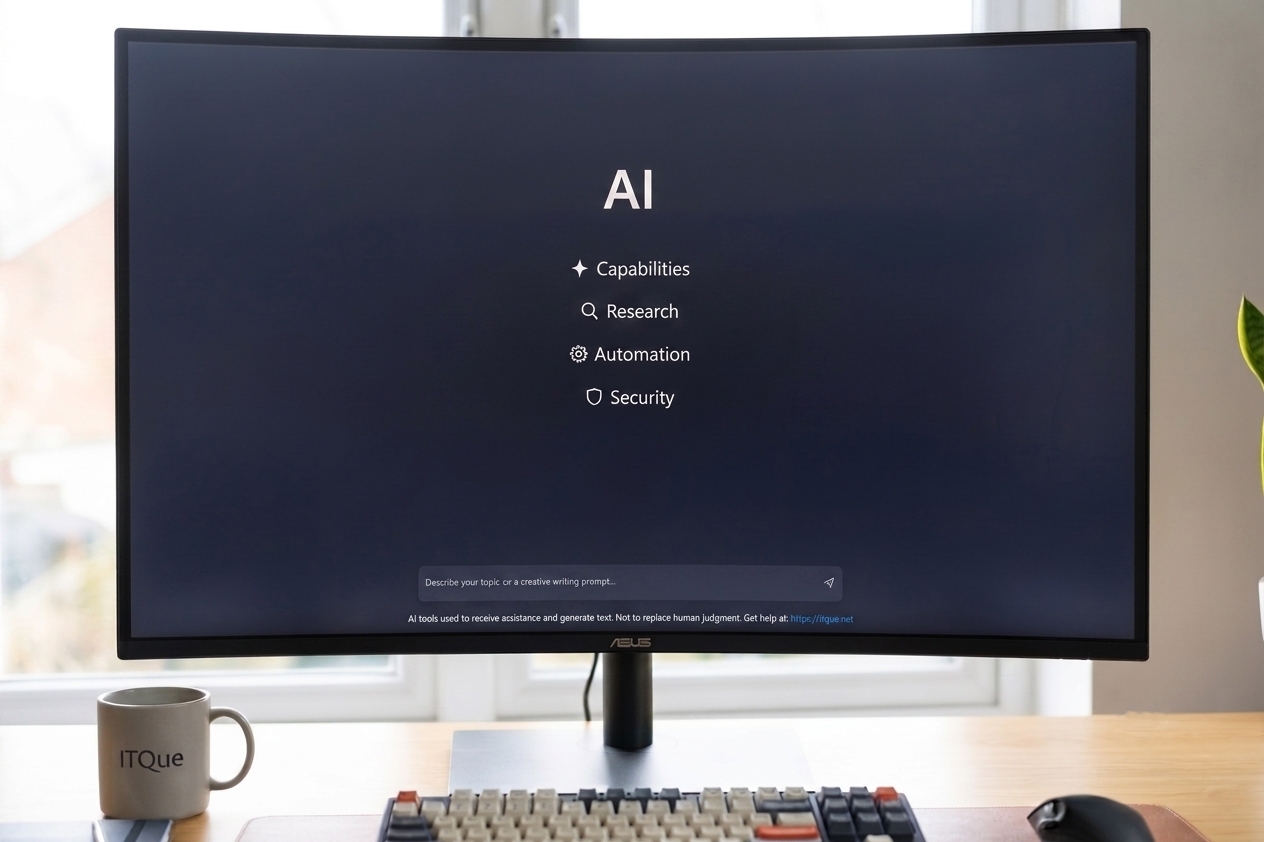

The goal of any new technology is to make life easier. In a matter of just a few short years, artificial intelligence has delivered on that promise, becoming one of the most impactful new technologies in the workplace.
Just like email, video conferencing, and cloud storage before it, AI is substantially changing how work gets done.
The question isn’t whether the productivity benefits of AI are real, but how the rapid adoption of AI tools has created an entirely new set of cybersecurity challenges that organizations can’t afford to ignore.
Why AI Use in the Workplace is Skyrocketing
AI tools are no longer confined solely to technical roles. Easy access to tools like ChatGPT, Claude, and Perplexity have given employees and even leadership easy access to tools that promise instant answers, planning help, and idea generation.
The surge in AI usage is driven by the promise of increasing productivity and efficiency. Whether it’s AI tools helping administrative teams draft emails or marketing teams developing campaign ideas, AI tools are helping to automate the most tedious and mundane tasks in everyday work.
Some workplaces have jumped straight into AI, adopting technologies at a rapid pace. Others are taking the slow burn approach. But even without employer oversight, employees are turning to AI tools to respond to customers faster, conduct better research, and support decision making and planning.
But with every new technology, there is invariably a period of adjustment. Employees are still learning how to use AI, and it’s up to leadership to make sure every employee practices responsible AI usage.
The Biggest Artificial Intelligence Security Risks
The key isn’t to be afraid of AI, but to promote the safe use of AI tools.
That starts with understanding the risks of AI.
Uploading Confidential Business Information
AI doesn’t just thrive on data, it requires it. Businesses must be cognizant of what data employees are feeding into AI. Just as a restaurant would never give away its secret recipe to a competitor, companies must take steps to maintain AI data privacy.
Yet many employees unknowingly upload sensitive data into AI tools every day. Customer lists, financial records, contracts, even source code; all are highly sensitive examples of data that is often uploaded into an AI platform.
What happens to uploaded data depends on the AI platform being used. Some AI models will use your data and proprietary information (and that of other companies) to inform answers to your competitors, or in other ways that employees may not fully understand.
Without clear policies in place for approved platforms and what can be shared, companies can quickly lose control over their sensitive information, and how it is being handled.
Data Privacy & Compliance Violations
Many businesses operate in industries with strict data privacy regulations, like healthcare, finance, and legal services.
Employees may paste information into AI without knowing that it includes personally identifiable information (PII) or protected health information (PHI). Sharing that data, even unintentionally, risks violating data privacy laws like GDPR, HIPAA, or CCPA, creating a direct link between AI compliance and security.
AI Hallucinations
Artificial intelligence safety isn’t exclusively about data theft and privacy. Sometimes AI tools just give flat-out wrong information.
People often assume that AI-generated information is always correct, but the truth is that these systems can and will make mistakes.
AI has been known to cite fake sources, completely invent facts, and misinterpret data. It can generate flawed code and produce inaccurate analysis. Blindly trusting AI outputs of any kind without verifying creates business risk.
For example, an employee may generate a customer report using AI that has inaccurate information. Software with code written by AI can have security vulnerabilities. Responsible AI usage means balancing AI outputs with human oversight.
Unapproved AI Tools
Even when employers OK the usage of specific AI tools for the workplace, employees will sometimes use other AI tools without approval. That creates what is called “shadow AI”.
Shadow AI is the use of AI tools without approval or knowledge of an organization’s IT and security teams. Using unapproved AI chatbots, browser plugins, or other tools creates a security risk that can expose company data to leakage and potential compliance violations.
AI-Powered Cyberattacks
Employees aren’t the only ones using AI. Cybercriminals are taking full advantage of AI tools to create more convincing phishing attacks and develop malware faster.
They’re even using it to create attacks that impersonate leadership, from emails that closely mimic writing styles to convincing AI generated audio and video.
As AI technology continues to improve, attacks will only grow in their sophistication. Businesses need to implement security controls that evolve alongside threats. Employee training, email security, access controls, and AI governance policies all help reduce that risk.
Essential AI Safety Guidelines for the Workplace
Awareness of the risks of AI is the starting point, but what does responsible AI usage actually look like?
Knowing What NOT to Upload
There are certain types of information that should never be shared with AI tools:
- Customer data
- Financial records
- Passwords
- Proprietary business information
- Employee personal information
Unless explicitly approved by your internal IT and security teams, these types of information should never be uploaded into an AI tool. Doing so creates real security risks. If employees are unsure, they should be coached to ask whether the data is appropriate to upload before doing so.
Using Only Approved AI Platforms
A company’s AI safety guidelines should include a list of approved AI tools. Guidelines should include the platforms allowed as well as which are prohibited, and what data can be safely shared. These lists can change over time, so it’s important to keep them updated.
Requiring Human Oversight
AI tools work best when they supplement human work and decision making, not replace it. Before acting on any reports, code, calculations, or content generated by AI, always have humans review material for accuracy.
Build Clear Policies & Training
It’s the responsibility of leadership to provide guidance to employees on AI data privacy and safe use of AI tools. That starts with creating a clear set of AI safety guidelines and security best practices.
Employees should receive basic security awareness training so they understand the risks and can keep their eyes open for potential security risks.
AI is changing rapidly, and these policies are likely to evolve alongside it. Always keep your employees up to date.
How an MSP Like ITque Can Help
Many small and midsized businesses can quickly find themselves unprepared for the reality that AI tools create risks along with the advantages it brings. That’s because they often lack internal IT and cybersecurity teams that can build AI governance programs.
That’s exactly where a managed service provider (MSP) like ITque can help. MSPs handle the technical challenges of IT and AI for their clients, helping them put in place the systems needed to thrive in the age of AI.
Creating AI Safety Guidelines
An MSP can help you develop your own internal AI safety guidelines, including establishing acceptable usage and approved AI tools. We can help your team understand data classification, and the responsibilities employees share in keeping that data safe and secure.
Implementing Security Controls
Implementing security controls can restrict the use of unapproved AI tools on company devices. ITque helps clients implement access control and endpoint monitoring that helps prevent employees from sharing sensitive information improperly.
Monitoring AI Usage
Tools are available that help companies see which AI tools their employees are actually using, and what the risks of these tools are. Understanding who is using them helps reduce the impact of shadow AI.
AI Governance
Establishing a framework for AI governance is essential in creating ethical AI usage. It sets standards for who can use AI, which tools are approved, and what data can be shared. AI governance also helps leadership understand AI risk management, and minimize the negative impact of the technology.
ITque: Helping Our Partners Establish Ethical AI Use
AI has made its way into the workplace, but productivity must be balanced with security. Without putting the right AI safety guidelines in place, well-meaning employees run the risk of creating real security, privacy, and compliance risks.
The most successful organizations won’t fear the risks of AI. They will balance its benefits with a strong AI governance framework that keeps those risks in check. That begins with implementing clear AI safety guidelines, employee training, and AI security best practices.
If your business is curious about the safe use of AI tools, contact ITque. We can help you develop the AI safety guidelines that create a culture of responsible AI usage in your workplace. Contact the team at ITque today.